Document recurring movement
Cracks that return after cosmetic repairs deserve a conversation about movement or moisture rather than another quick cover. A drywall estimate should state when another trade needs to investigate before surface work proceeds. If the completion date matters most, allow for intervals between coats as well as active labor rather than assuming the entire process happens continuously.
Set the paint boundary
Even a well blended patch can remain noticeable when touched up with an aged or unavailable paint color. Consider a corner to corner decorative boundary when color or sheen differences would otherwise remain noticeable. If the surface condition is uncertain, allow for an assessment that can distinguish stable material from layers that should never be covered.
Reinforce panel seams
The connection between old board and a patch needs reinforcing joint treatment. The tape belongs in a compatible bedding coat without trapped air or dry unbonded edges. When panel replacement exposes a cavity, resolve any required inspection before that opening is closed and the finishing work begins.
Build thin finishing coats
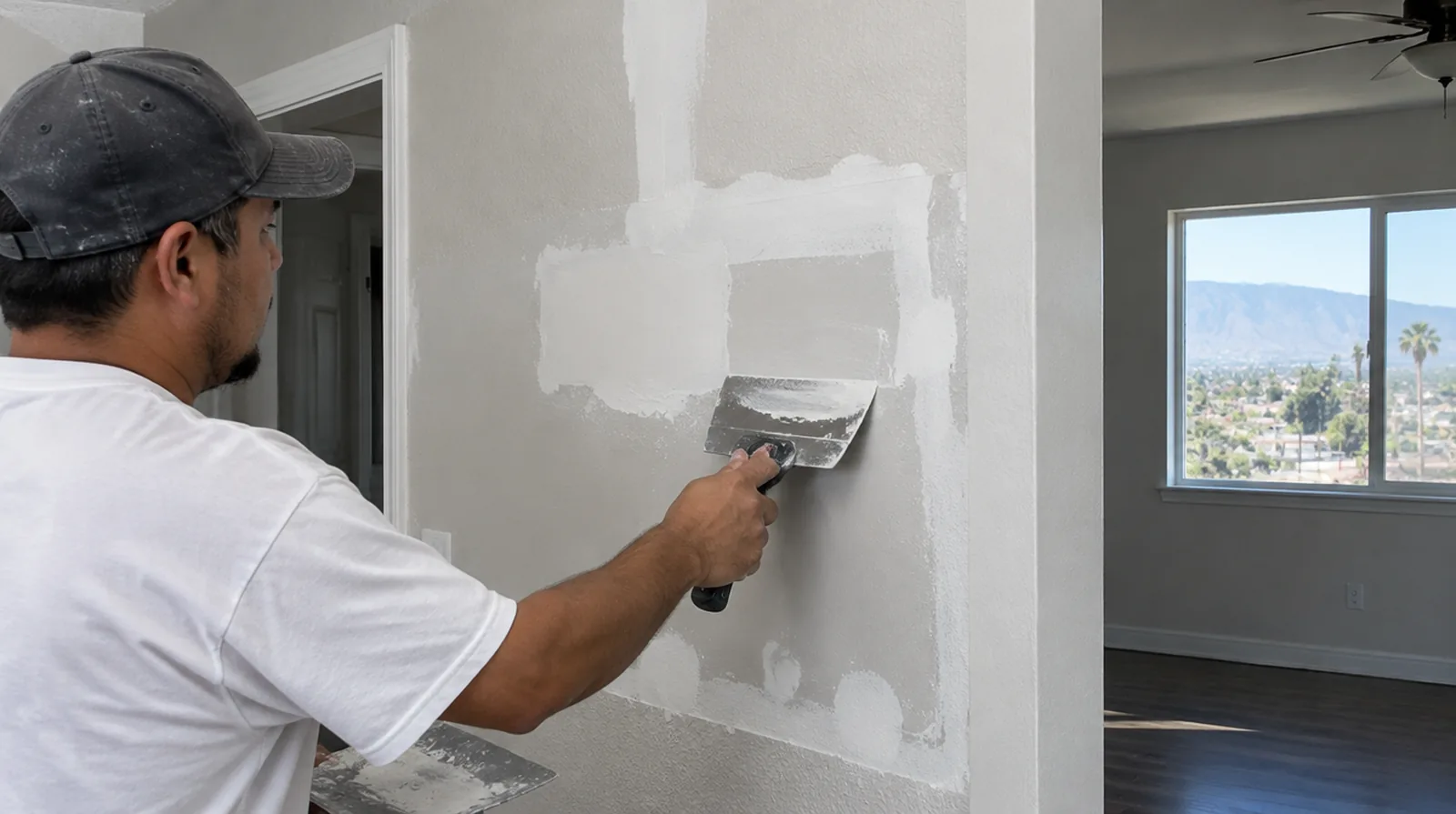
Shaping a repair through thinner coats gives more control than depositing all the material at once. Each layer needs adequate drying time before the next pass can be judged accurately. If a household member is sensitive to dust, discuss containment and cleaning expectations before choosing how to stage the space work.
Prepare for primer
Fresh compound and existing painted drywall absorb coatings differently unless the repair receives suitable primer. Verify whether the quote includes priming or ends with a sanded surface ready for the painter. For a limited patch requiring substantial setup, assess the complete package of access and protection rather than relating cost only to the opening size.
Choose the patch boundary
Loose paper and crumbling gypsum must be removed until the surrounding panel can support a durable repair. A tidy rectangular cut often provides stronger backing than following an irregular broken edge. If the original finish is unusual, keep a small reference sample or a close photograph to support the discussion about blending and restoration.
Support the replacement
A substantial hole is normally rebuilt with board and proper support, not filled entirely with finishing material. Use a replacement that aligns with the original panel face before attempting to blend the joints. Where light reflects along the wall, inspect the complete plane instead of limiting the review to the edge immediately next to the repaired section.
Feather beyond the opening
Concealing a patch perimeter requires a tapered finishing area wider than the opening itself. A broad blend reduces the ridge that otherwise appears when light travels across the wall surface. When a paint contractor follows the drywall work, define the surface condition being handed over and decide who handles any minor final touch ups.
Handle small fastener marks
A bump over a fastener may reflect separation or movement at the panel support. Adding suitable fastening nearby may be necessary before the damaged spot receives finishing compound. In a room with little free floor space, identify temporary storage for belongings and establish adequate clearance for the work before delivery.
Protect adjacent surfaces
Small wall repairs can still distribute fine dust through the room if protection is inadequate. Identify the possessions to move and agree which adjacent spaces need to stay usable. For a surface carrying numerous paint layers, discuss whether differences in the retained profile or sheen justify decorating a broader area.
Project context in Pomona
Identify where sheets and tools can be staged without damaging existing trim. Shelving, cabinets and other fixtures can require backing or service coordination that is easier to address during installation.
Scope questions before finishing
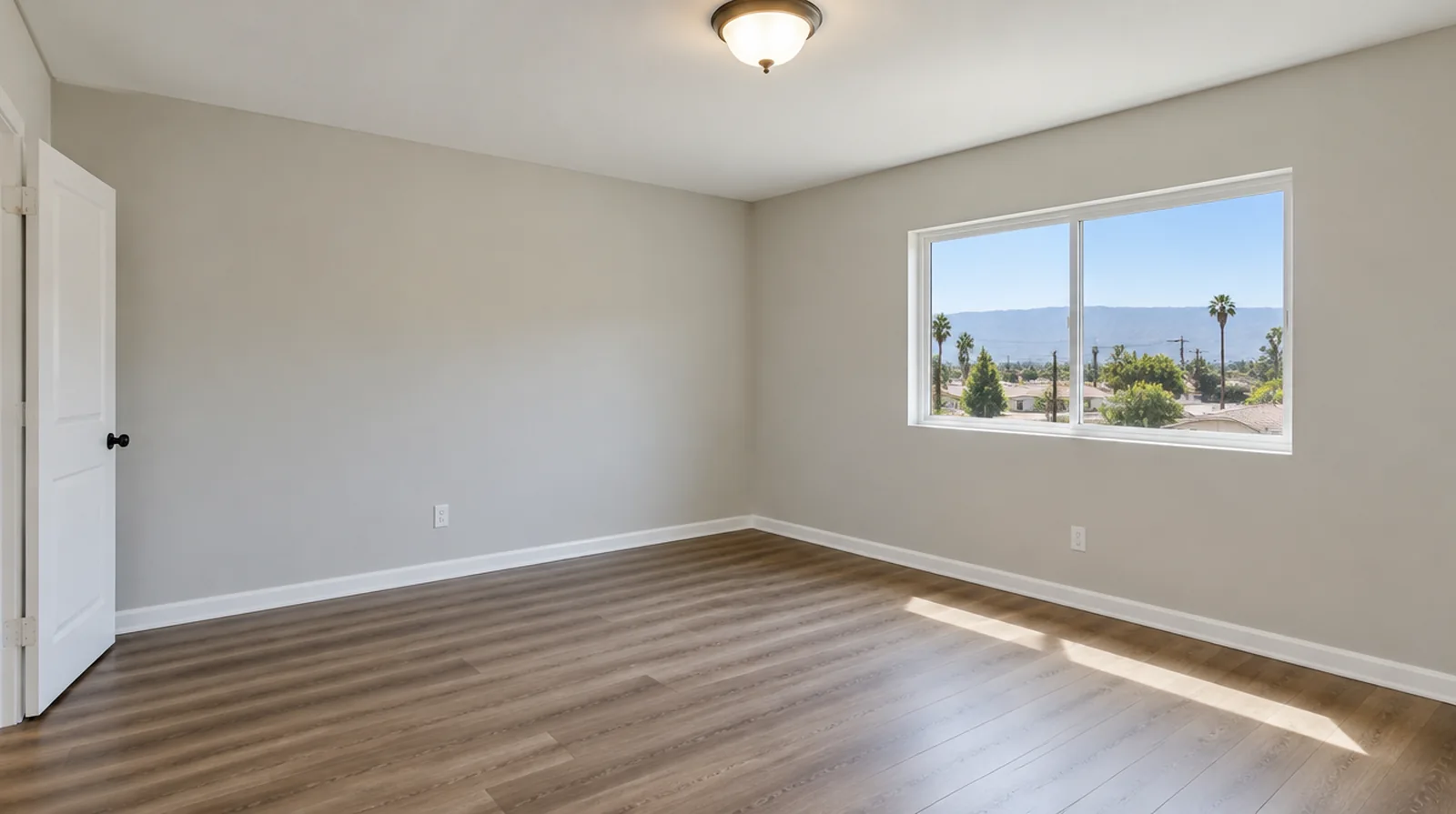
At the handover inspection, review the finish from ordinary room positions using the lighting conditions that were agreed for the work.
While a removed panel exposes the wall cavity, complete the necessary review of concealed work before replacement board closes the opening.
Where the quoted work stops before painting, request a well defined description of what remains so the next decorating stage can be priced realistically.
When a paint contractor follows the drywall work, define the surface condition being handed over and decide who handles any minor final touch ups.
Where the wall meets fixed furniture, clarify whether removal is included or whether the finish will terminate at the accessible edge.
When painting is outside the proposal, describe the remaining decorative preparation clearly so another contractor can price that stage accurately.
For a limited patch requiring substantial setup, assess the complete package of access and protection instead of relating cost only to the opening size.
For a tightly furnished room, plan temporary storage and the minimum working clearance before material is carried into the property.
If scheduling is the main concern, separate hands on labor from drying intervals instead of treating every visit as a full day of active work.
If the proposal requires return visits, identify the purpose of each stage and the intervals during which finishing material needs to remain undisturbed.
For a distinctive existing pattern, retain a reference sample or detailed picture to make the matching discussion more specific.
Where existing floors will remain, specify protective measures and review the path used by panels, equipment and finishing tools.
Explore the Pomona drywall overview for related options, or read the project planning information before arranging the next stage.
More planning details for Pomona
For a Pomona renovation, decide what the finished room will contain before closing an open wall. Strong side lighting can also make a simple looking wall more demanding to finish. Show the intended lighting arrangement and paint sheen while discussing the surface standard.